Agrivoltaics (or agrophotovoltaics) is the combined use of a single piece of land to generate solar energy and produce food. Instead of competing for space, solar panels and crops or livestock coexist on the same plot, reinforcing each other.
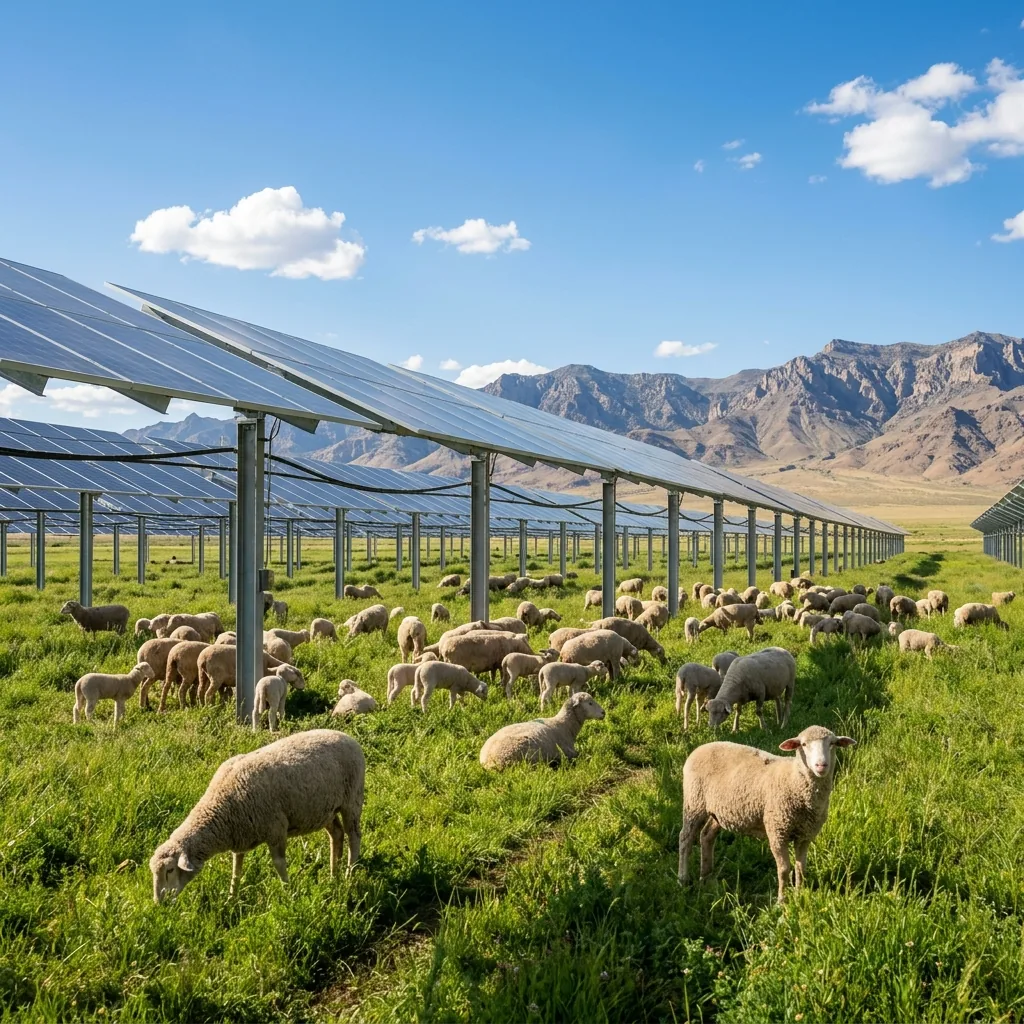
Panels are mounted on elevated structures (between 2.5 and 4 meters high), with wider spacing than a conventional solar farm. This lets in enough indirect light for crops to grow underneath, or leaves room for livestock to graze and for light farm machinery to pass through. In more advanced systems, the panels track the sun and adjust their tilt to dose the shade crops need at each point in the day.
Higher land productivity. By using the same land for two purposes at once, agrivoltaic systems can reach 60-70% higher combined productivity than running separate solar and agricultural plots, with documented cases of up to 186% land-use efficiency for shade-tolerant crops like lettuce and potatoes.
Better panel performance. Evapotranspiration from plants and grass cools the air around the modules, which can lower their temperature by up to 10°C compared to a traditional solar farm on bare soil. Cooler panels generate more electricity and last longer.
Water savings. Partial shade reduces soil evapotranspiration, translating into water savings of 14% to 50% depending on the crop and region.
Extra income for farmers. Beyond crop production, leasing land for solar can generate $300 to $2,000 per acre annually, on top of 10-30% cost savings from the cooling effect and reduced irrigation needs.
Biodiversity benefits. Iowa State University researchers recorded up to a 412% increase in honey production from bee colonies placed near agrivoltaic installations, thanks to greater wildflower cover under the panels.
The global agrivoltaics market is projected to reach $8.15-8.9 billion by 2030, with the United States leading at over 2.8 GW of identified projects. This isn't experimental technology anymore: it already runs at large scale, like the Talatan Solar Park in China, the world's largest photovoltaic project, built on degraded desert land on the Tibetan Plateau.
We apply this model to transform arid or degraded land into productive pastures, combining solar energy with regenerative agriculture and controlled grazing. If you own land and want to evaluate its potential, let's talk about your land.